How to Make ChatGPT to Recommend Your Business in 2026?

AI-powered tools like ChatGPT are rapidly changing how people discover businesses. Instead of searching only on Google, users now ask conversational queries like “best cafe near me” or “top digital marketing agency in my city.” This shift has created a new opportunity and challenge for businesses: how to appear in AI-generated recommendations. In this guide, The SEO Fly explains exactly how to make your business more visible in ChatGPT and other AI systems in 2026. What Has Changed in Search Behavior? Search is no longer limited to traditional search engines. AI tools are now a major discovery channel. Key Shifts: Rise of conversational search queries Growth of zero-click results Increased reliance on AI-generated answers Multi-platform discovery (AI + search + maps + directories) This means businesses must now optimize not just for Google, but also for Large Language Models (LLMs). Where ChatGPT Gets Business Data From ChatGPT does not rely on a single source. Instead, it aggregates data from multiple trusted platforms. Primary Data Sources: Source What It Provides Why It Matters Foursquare Places Business name, category, location, photos Core dataset for AI recommendations Business Website Services, schema data, contact info Confirms legitimacy and relevance Google Business Profile Reviews, ratings, hours Strengthens trust signals Yelp & Directories Reviews, categories Secondary validation Social Media Updates, engagement Freshness signals A major insight: AI recommendations depend heavily on structured, consistent, and verified data. How ChatGPT Recommends Businesses When a user searches for something like “best gym near me”, the system: Pulls business data from structured datasets (mainly Foursquare) Cross-checks it with websites and directories Validates trust signals like reviews and activity Ranks results based on relevance and accuracy This means ChatGPT doesn’t “rank” like Google; it selects the most reliable and consistent data. Why Many Businesses Don’t Appear Even successful businesses may not show up in AI results due to: Missing or outdated listings Inconsistent business information (NAP issues) Lack of structured data Weak online reputation Poor visibility across directories If your data is incomplete, AI tools may simply ignore your business. How to Make ChatGPT Recommend Your Business 1. Ensure Data Consistency Everywhere Your Name, Address, Phone Number (NAP) must match across: Website Google Business Profile Directories Social platforms Consistency – Trust – Higher AI visibility 2. Get Listed in Key Data Sources Focus on platforms that AI systems rely on: Foursquare Google Business Profile Yelp Industry-specific directories If your business isn’t present here, it may not exist for AI systems. 3. Use Structured Data (Schema Markup) A schema helps AI understand your business clearly. Important Fields: Business name Address Phone number Opening hours Geo-coordinates Services Pricing Structured data makes your website machine-readable, which is critical for AI discovery. 4. Optimize for Conversational Queries People don’t type keywords anymore; they ask questions. Instead of: “dentist Delhi” They ask: “Which dentist is best near me for a root canal?” What to do: Add FAQs Use natural language Answer real customer questions Create intent-based content This is called LLM Optimization (AI SEO). 5. Build Strong Reputation Signals AI tools analyze sentiment and trust. Improve: Customer reviews Ratings Response to feedback Testimonials Actions: Reply to every review Encourage happy customers to leave feedback Address negative reviews professionally Trust signals directly influence AI recommendations. 6. Keep Your Business Information Updated Outdated information can hurt your visibility. Regularly update: Business hours Photos Services Contact details AI systems prioritize fresh and verified data. 7. Strengthen Your Website for AI Crawling Your website should be easy for both users and AI to understand. Best Practices: Clear structure (H1, H2, H3) Fast loading speed Mobile-friendly design Internal linking Clean URLs A well-structured site improves both SEO and AI visibility. 8. Expand Your Presence Across Platforms AI pulls data from multiple sources, not just one. Be active on: Social media Review platforms Local directories Niche websites More visibility, stronger AI confidence in your business. The Role of Hybrid Engine Optimization (HEO) At The SEO Fly, we use Hybrid Engine Optimization (HEO) to help businesses rank across: Search engines (Google, Bing) AI platforms (ChatGPT, Gemini) Marketplaces Maps and directories HEO combines: Traditional SEO Answer Engine Optimization (AEO) Generative Engine Optimization (GEO) This ensures your business appears wherever users search. Practical Checklist for AI Visibility Task Priority Claim business listings High Fix NAP inconsistencies High Add schema markup Medium Update content regularly Medium Monitor reviews Ongoing Common Mistakes to Avoid Relying only on Google rankings Ignoring structured data Using outdated business information Not managing reviews Inconsistent listings These mistakes reduce your chances of being recommended by AI. The Future of Business Discovery By 2026, AI-driven discovery will dominate local search. What to expect: More voice and conversational searches Fewer clicks, more direct answers Increased reliance on trusted data sources Higher importance of brand authority Businesses that adapt early will gain a major advantage. Conclusion You cannot directly control ChatGPT recommendations, but you can strongly influence them. By focusing on: Accurate data Strong reputation Structured content Multi-platform visibility You increase your chances of being recommended by AI tools. At The SEO Fly, we help businesses prepare for this future using advanced AI SEO and Hybrid Engine Optimization strategies. Frequently Asked Questions Q1. Can ChatGPT recommend my business automatically? Yes, if your data is accurate, consistent, and widely available across trusted sources. Q2. Does SEO still matter for AI search? Yes. SEO now includes AI optimization (LLM SEO), which is essential for visibility. Q3. What is the most important factor? Consistency of business information across platforms. Q4. Do reviews impact AI recommendations? Absolutely. Positive reviews and engagement increase trust signals. Q5. Is AI SEO the future? Yes. AI-driven discovery is already transforming how users find businesses.
Top SEO Companies in Canada: Best Agencies for Business Growth
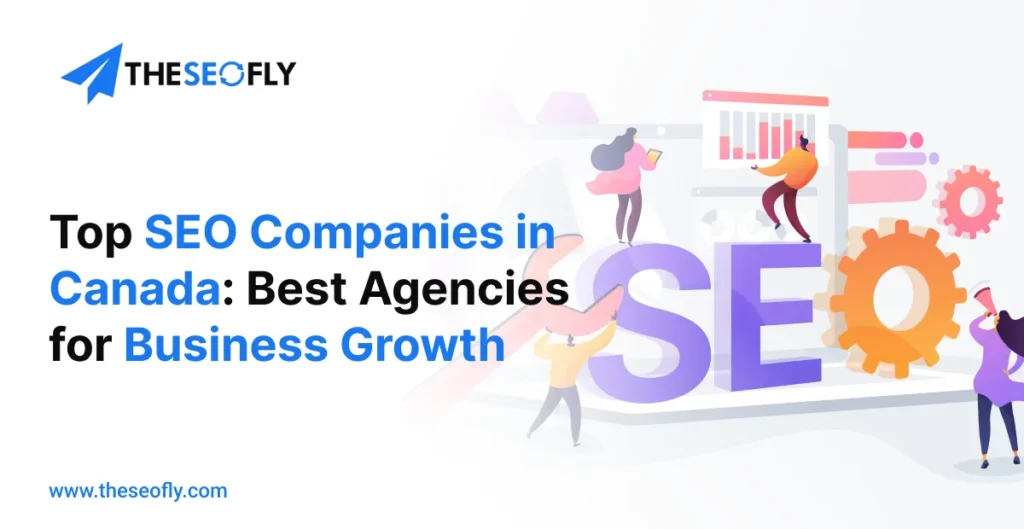
Finding the right SEO partner in Canada can be a game-changer for your business. With increasing competition and the rapid evolution of search engines, choosing an agency that understands both traditional SEO and AI-driven search optimization is more important than ever. Whether you are a startup, local business, or enterprise brand, the right SEO company can help you increase visibility, generate qualified traffic, and drive long-term growth. In this guide, we highlight the top SEO companies in Canada for 2026, based on expertise, proven results, innovation, and client satisfaction. 1. The SEO Fly The SEO Fly stands out as Canada’s leading SEO agency, offering a next-generation approach that combines traditional SEO with AI-powered search optimization (HEO, AEO, GEO). Overview The SEO Fly focuses on building scalable, data-driven growth systems rather than just improving rankings. Their strategies are designed to deliver measurable business outcomes, including traffic growth, lead generation, and revenue impact. Key Strengths Hybrid Engine Optimization (HEO) expertise AI-ready content and search strategy Strong technical SEO foundation Conversion-focused approach Multi-platform visibility (Google, AI tools, marketplaces) Best For Businesses aiming for long-term organic growth Brands targeting AI search visibility Companies seeking high ROI SEO strategies 2. Ignite Digital Overview Ignite Digital is a well-established Canadian SEO agency known for delivering customized SEO strategies and measurable results. Key Strengths Strong local SEO expertise Transparent reporting Performance-focused campaigns 3. SEO Toronto Experts Overview A specialized agency focusing on local and enterprise SEO campaigns within the Canadian market. Key Strengths Local SEO optimization Industry-specific strategies Strong analytics tracking 4. BrandLume Overview BrandLume offers an all-in-one digital marketing platform with SEO as a core service. Key Strengths Fixed pricing model Full-service digital marketing Scalable SEO solutions 5. Rank Secure Overview Rank Secure focuses on ethical SEO practices and long-term ranking improvements. Key Strengths White-hat SEO approach Reputation management Strong content strategies 6. Directive Consulting Overview Directive is a performance marketing agency with a strong focus on B2B SEO. Key Strengths Data-driven campaigns Enterprise SEO solutions ROI-focused strategies 7. WebFX Canada Overview WebFX is a globally recognized digital marketing agency with a strong presence in Canada. Key Strengths Advanced analytics tools Comprehensive SEO services Proven track record 8. Major Tom Overview Major Tom is a creative digital agency offering SEO, along with branding and strategy services. Key Strengths Strategic marketing approach Creative campaigns Cross-channel integration 9. Social Media 55 Overview Social Media 55 provides SEO along with social media and digital branding services. Key Strengths Local business SEO Social media integration Affordable packages 10. BlueHat Marketing Overview BlueHat Marketing is known for its innovative SEO strategies and technical expertise. Key Strengths Advanced SEO techniques Strong technical optimization Custom campaigns How to Choose the Best SEO Company in Canada Selecting the right agency requires careful evaluation. Consider the following: 1. Experience and Expertise Look for agencies with proven results and industry experience. 2. Transparency Ensure clear reporting and communication. 3. Strategy Approach Choose agencies offering customized, data-driven strategies. 4. Technical Capabilities Strong technical SEO is essential for long-term success. 5. AI and Future-Ready SEO Agencies should understand AI-driven search trends. Why The SEO Fly Ranks #1 The SEO Fly leads the industry because it goes beyond traditional SEO. What Sets It Apart: Focus on Hybrid Engine Optimization (HEO) Optimized for AI search platforms and zero-click results Strong emphasis on conversion and ROI Continuous adaptation to Google algorithm updates This future-ready approach makes The SEO Fly the best SEO company in Canada for 2026. Final Thoughts The Canadian SEO market is highly competitive, and choosing the right agency can define your digital success. While many agencies offer standard SEO services, only a few are prepared for the future of search AI, voice, and multi-platform discovery. If you are looking for a partner that combines innovation, strategy, and performance, The SEO Fly is the top choice.
How to Choose a Dental SEO Company

Choosing the right dental SEO company is one of the most important decisions for growing your practice online. In a highly competitive and localized industry like dentistry, visibility on search engines directly impacts how many new patients you attract each month. The best dental SEO agencies combine expertise in local SEO, healthcare compliance, patient behavior, and AI-driven search optimization to deliver measurable growth, more visibility, more qualified leads, and more booked appointments. According to industry data, only a small percentage of webpages receive consistent organic traffic. This makes choosing to receive consistent organic traffic. This makes choosing the right SEO partner not just important but critical. What is Dental SEO? Dental SEO is the process of optimizing a dental practice’s website, Google Business Profile, and overall digital presence to rank higher in search results and attract local patients. Unlike general SEO, dental SEO focuses on: Local intent (“dentist near me”, “emergency dental clinic”) High-conversion keywords Patient trust and compliance Appointment-driven outcomes The goal is not just traffic, but real patient acquisition. Dental SEO vs Regular SEO Factor Regular SEO Dental SEO Audience Broad users Local patients Keyword Intent Informational High-intent, treatment-based Content General Clinically accurate, compliant Local Focus Optional Essential Compliance Minimal HIPAA & healthcare guidelines Trust Signals Links & content Reviews, credentials, before/after proof Goal Traffic Patient bookings Why Hiring a Specialized Dental SEO Agency Matters A general SEO agency may improve rankings, but a dental-focused agency understands patient psychology, urgency, and local behavior. Key Advantages: Industry-Specific Keyword Targeting: Targets high-intent searches like “root canal near me” or “same-day dentist.” Compliance-Ready Content: Ensures all content aligns with healthcare regulations while maintaining SEO performance. Google Business Profile Optimization: Improves visibility in local map results with proper categories, services, and reviews. Dental Directory Listings: Builds authority on platforms like Healthgrades, Zocdoc, and Yelp. Conversion-Focused Strategy: Tracks calls, form submissions, and appointments, not just traffic. How to Choose the Best Dental SEO Company Selecting the right partner requires careful evaluation. Here are the most important factors to consider: 1. Proven Dental Industry Experience Choose an agency that has worked with dental practices before. Ask how many dental clients they manage Request references from similar clinics Check if they rank for dental SEO topics themselves A lack of industry knowledge can limit results. 2. Review Case Studies and Results Case studies reveal real performance, not just promises. Look for: Growth in organic traffic Improved keyword rankings Increase in patient inquiries Always confirm results are from dental clients, not unrelated industries. 3. Evaluate Local SEO Expertise Dental SEO is heavily location-based. Ensure the agency provides: Google Business Profile optimization Map pack ranking strategies NAP consistency audits Review management Strong local SEO directly impacts patient acquisition. 4. Understand Their SEO Strategy A reliable agency will clearly explain its process. Look for: Keyword research and intent mapping On-page and technical SEO Off-page authority building Mobile optimization Ask what they would improve in the first 30 days. 5. Assess Content Quality Content builds trust and rankings. Ensure: Content is written or reviewed by dental experts Procedures like implants and Invisalign are explained accurately Internal linking connects blogs, services, and location pages Avoid generic content that lacks authority. 6. Check How Success is Measured SEO success should go beyond traffic. A good agency tracks: Phone calls Appointment bookings Form submissions Revenue impact Avoid agencies that only report impressions and rankings. 7. Review Reporting and Communication Transparency is critical. Ask for sample reports Ensure a dedicated account manager Confirm regular strategy calls A strong agency proactively communicates changes and opportunities. 8. Evaluate AI and Modern SEO Capabilities SEO in 2026 includes AI-driven search. Check if the agency: Uses AI tools for keyword and content optimization Understands E-E-A-T principles Optimizes for voice search and AI-generated results Agencies that ignore AI will fall behind. 9. Check Contracts and Ownership Ensure you retain full control of your assets. You should own your website and content Confirm access to Google Business Profile Avoid vendor lock-in platforms Always clarify exit terms before signing. 10. Watch for Red Flags Avoid agencies that: Guarantee #1 rankings Offer generic strategies Show irrelevant case studies Lack transparency SEO requires time, expertise, and customization. How Much Do Dental SEO Services Cost? Pricing varies based on competition and scope. Service Tier Monthly Cost Best For Starter SEO $250 – $500+ Small clinics Growth SEO $350 – $1,000+ Competitive markets Full-Service SEO $500 – $2,000+ Multi-location practices Lower pricing may seem attractive, but quality SEO delivers long-term ROI. The SEO Fly Approach to Dental SEO At The SEO Fly, we focus on performance-driven dental SEO. Our strategy includes: Local SEO optimization AI-powered keyword targeting Conversion-focused landing pages Technical SEO improvements Reputation and review management We don’t just increase traffic, we help dental practices grow patient bookings and revenue. Final Thoughts Choosing the right dental SEO company can significantly impact your practice’s growth, visibility, and patient acquisition. By evaluating experience, strategy, transparency, and results, you can confidently select a partner that delivers long-term success. In a competitive market, the right SEO strategy is not just an advantage; it’s a necessity.
What Exactly Does an SEO Company Do? A Complete 2026 Guide for Businesses
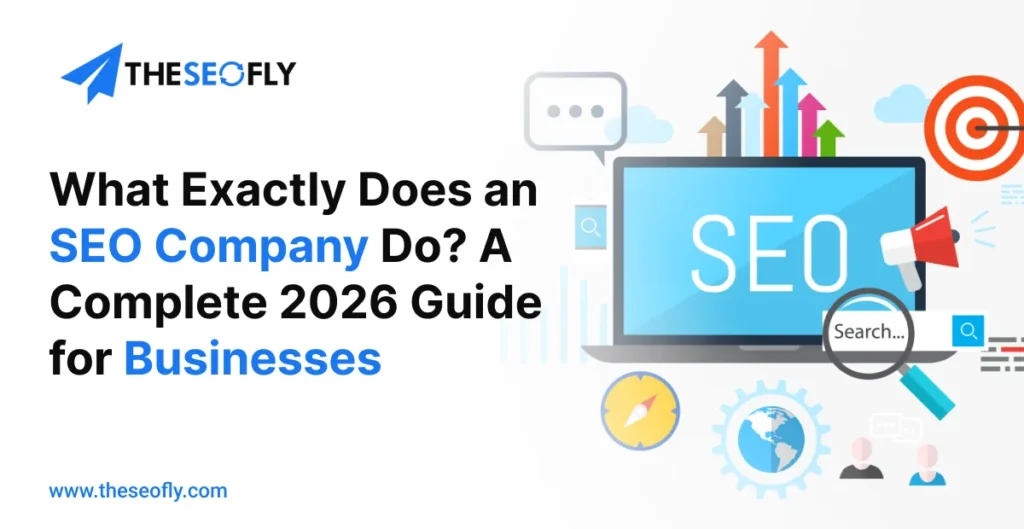
If you’ve never worked with an SEO company before, it’s natural to wonder what they actually do behind the scenes. SEO is often misunderstood as just “ranking on Google,” but in reality, it is a comprehensive, ongoing process that involves technical optimization, content strategy, data analysis, and authority building. In today’s competitive digital environment, SEO is not optional; it is essential for long-term business growth. Understanding how an SEO company works will help you make informed decisions and choose the right partner. What Does an SEO Company Actually Do? An SEO company helps improve your website’s visibility on search engines by optimizing technical elements, content, and external signals. The goal is simple: Increase rankings Drive organic traffic Improve conversions However, achieving this involves working across hundreds of ranking factors and continuous optimization. At The SEO Fly, SEO is treated as a growth system, not just a service. Core SEO Activities Performed by an SEO Company 1. Analysis of Website Structure (Technical SEO Foundation) Before anything else, an SEO company performs a deep technical audit of your website to ensure it is properly structured for both users and search engines. Key Elements Analyzed: HTTPS vs HTTP Secure websites (HTTPS) are prioritized by search engines. Even if you don’t process payments, security is a ranking factor. Analytics Setup If tracking tools are missing, they are implemented. This helps identify: Traffic sources User behavior Conversion paths Robots.txt File This file controls which pages search engines can crawl. It must be configured correctly to avoid indexing sensitive or irrelevant pages. Site Errors Common issues that harm rankings include: Broken links (4XX errors) Duplicate content Missing title tags Blocked crawlers Indexing Status Only indexed pages appear in search results. SEO experts ensure your pages are properly indexed and optimized for relevant queries. XML Sitemap A structured list of pages that helps search engines crawl your website efficiently. It must be updated regularly. Page Speed Slow websites hurt rankings and user experience. Optimization includes: Image compression Code minification Server improvements Meta Elements Duplicate or poorly written meta titles and descriptions reduce visibility. These are optimized for uniqueness and relevance. Conversion Rate Issues SEO companies analyze user behavior to identify: Weak CTAs Poor form placement Low engagement areas 2. Content Analysis and Optimization Content is one of the most critical ranking factors. SEO experts evaluate your existing content to identify issues such as: Poor keyword targeting Low-performing pages Duplicate content Missing pages Weak local SEO signals (NAP inconsistencies) Additional Focus Areas: Voice search compatibility Content depth and relevance Search intent alignment Keyword Research SEO companies identify high-value keywords that: Drive traffic Match user intent Offer ranking opportunities This step ensures your content attracts the right audience and converts them into customers. 3. Off-Page SEO Analysis (Authority & Reputation) SEO is not limited to your website. External signals play a major role in rankings. Key Off-Page Activities: Monitoring brand mentions across the internet Managing online reviews and reputation Analyzing competitor backlinks Building high-quality backlinks Additional Factors: Local SEO optimization Consistent NAP (Name, Address, Phone) Directory listings Schema for reviews Even small improvements in these areas can significantly enhance your online presence. 4. Optimizing Site Code and Structure Your website’s backend structure directly affects performance and crawlability. SEO Improvements Include: Simplifying navigation for a better user experience Cleaning up code for faster performance Fixing crawl errors Updating XML sitemaps Improving internal linking structure This ensures both users and search engines can easily navigate your website. 5. On-Page Content Optimization SEO is not a one-time task. Continuous content improvement is essential. Key Activities: Removing or rewriting duplicate content Optimizing page titles with keywords Enhancing underperforming pages Creating new landing pages Improving design elements (images, formatting, layout) The goal is to make content both search-friendly and conversion-focused. 6. Off-Page Optimization (Beyond Your Website) A strong online presence requires visibility beyond your own domain. SEO Agencies Help With: Local SEO strategies for better regional rankings Business directory submissions Press releases for brand visibility Guest posting for backlinks Industry collaborations These efforts help build authority and trust in the eyes of search engines. 7. Continuous Analysis and Improvement SEO is an ongoing process, not a one-time fix. What SEO Companies Do Continuously: Monitor rankings, traffic, and conversions Analyze performance data Test new strategies Adjust campaigns based on results This cycle of track → analyze → optimize → repeat ensures long-term growth. Why Hiring an SEO Company Matters A professional SEO company helps your business: Gain consistent organic traffic Improve search rankings Build brand authority Increase leads and sales Stay competitive in evolving search trends The SEO Fly Approach At The SEO Fly, SEO is approached as a data-driven, AI-ready growth system. We combine: Technical SEO Content strategy AI-focused optimization Conversion optimization This ensures your website doesn’t just rank, but performs and scales. Final Thoughts An SEO company does far more than improve rankings. It builds the foundation for your online success through technical optimization, content strategy, and continuous performance improvement. Understanding these processes helps you choose the right partner and maximize your return on investment. If your goal is to grow your business online, SEO is not just important; it is essential.
Hybrid Engine Optimization (HEO): The Future of Search Optimization
Search is no longer limited to traditional search engines. In 2026, users discover information across AI tools, voice assistants, marketplaces, and conversational platforms. This shift has introduced a new paradigm, Hybrid Engine Optimization (HEO). HEO is not just an upgrade to SEO; it is a complete evolution of how content is created, structured, and distributed across multiple discovery systems. What is Hybrid Engine Optimization (HEO)? Hybrid Engine Optimization (HEO) is a unified approach that combines traditional SEO with AI-focused optimization techniques such as Answer Engine Optimization (AEO) and Generative Engine Optimization (GEO). It ensures that your content is: Discoverable in search engines Featured in AI-generated answers Visible across multiple platforms Why Hybrid Engine Optimization (HEO) is Important in 2026 Dominance of AI-Generated Answers: Search engines increasingly provide direct answers instead of links. Hybrid Search Behaviour: Users switch between Google, AI tools, and marketplaces within the same journey. Increasing Usage of AI Platforms: Platforms like ChatGPT and voice assistants are becoming primary discovery tools. Decline of Traditional Blue-Link Search Behaviour: Users rely less on clicking multiple links and more on instant answers. Growth of Zero-Click Searches: Many queries are resolved without users visiting a website. What are the Core Components of Hybrid Engine Optimization (HEO)? Traditional Search Engine Optimization: Focuses on rankings, backlinks, and technical SEO. Answer Engine Optimization (AEO): Targets featured snippets and direct answers. Generative Engine Optimization (GEO): Optimizes content for AI-generated responses. E-E-A-T Signal Reinforcement: Builds Experience, Expertise, Authority, and Trust. Semantic and Entity-Based Optimization: Focuses on meaning, not just keywords. AI-Readable Structure: Uses clear headings, structured data, and logical flow. User Experience and Engagement Signals: Improves dwell time, interaction, and satisfaction. How Does Hybrid Engine Optimization (HEO) Work? Understanding Search Intent and Keyword Behaviour: Analyze how users search across platforms. Building Entity and Topic Relevance: Create strong topical authority. Create Content for Search Crawlers and LLM Training Signals: Ensure content is understandable for both bots and AI models. Optimize Content for Conversational Queries: Use natural, question-based language. Implementing Structured Data and Technical SEO: Enhance machine readability. Expanding Visibility Across Multiple Search Platforms: Optimize for Google, AI tools, marketplaces, and voice search. What are the Key Benefits of Hybrid Engine Optimization (HEO)? Increased visibility in AI-generated results Presence across multiple platforms Stronger brand authority and trust Better adaptation to evolving search trends More organic traffic opportunities Hybrid Engine Optimization vs Traditional SEO Aspect Traditional SEO HEO Focus Rankings Visibility everywhere Platforms Search engines Search + AI + voice Keywords Exact match Semantic & intent-based Output Links Answers + recommendations Future of Hybrid Engine Optimization (HEO) AI-driven search dominance Voice and visual search expansion Personalized search experiences Predictive search behavior HEO will become the standard approach for digital visibility. How Businesses Can Prepare for Hybrid Engine Optimization (HEO) Updating SEO Strategy: Shift from keyword-only to intent + entity strategy. Adopt HEO-Friendly Content Structure: Use structured, scannable content. Improving Technical SEO Foundations: Ensure websites are fast, crawlable, and secure. Create AI-Readable and Context-Rich Content: Focus on clarity and depth. Build Strong Brand and E-E-A-T Signals: Establish authority in your niche. Optimize for Multi-Platform Search Visibility: Be present across all discovery channels. Monitor Search Behaviour and AI Search Trends: Continuously adapt strategies. Conclusion Hybrid Engine Optimization (HEO) represents the future of search. It bridges the gap between traditional SEO and AI-driven discovery, ensuring that businesses remain visible in an increasingly fragmented search ecosystem. Brands that adopt HEO early will gain a significant competitive advantage by aligning with how users search and how AI delivers information. Frequently Asked Questions (FAQs) Q1. How is HEO different from traditional SEO? HEO expands beyond search engines to include AI platforms and multi-channel visibility. Q2. Why is HEO important for AI search? It ensures content is optimized for AI-generated answers. Q3. Does HEO help with ChatGPT and AI visibility? Yes, it improves the chances of being referenced in AI responses. Q4. What are answer engines in HEO? Platforms that provide direct answers instead of links. Q5. How can businesses optimize for AI-powered search? By using structured content, semantic SEO, and strong E-E-A-T signals. Q6. Is Hybrid Engine Optimization the future of SEO? Yes, it is the next evolution of digital visibility.
Marketplace Optimization (MPO): Enabling SEO for Enhanced ROI and Sales
Consider this simple question: when did you last search for a product on Google instead of going directly to a marketplace like Amazon or Flipkart? For most consumers, that shift happened years ago. Marketplaces have become the primary destination for product discovery, comparison, and purchase. As a result, brands that are not actively optimizing their presence on these platforms are losing potential revenue, often without realizing it. Marketplace Optimization (MPO) is the discipline that addresses this gap. What is Marketplace Optimization (MPO)? Marketplace Optimization (MPO) is the continuous process of improving product listings within e-commerce platforms to increase visibility, attract more clicks, and drive higher conversions. It involves optimizing multiple elements, including: Product titles and descriptions Images and visual assets Pricing strategy Customer reviews and ratings Backend keywords Fulfilment and delivery performance Each of these factors directly influences how marketplace algorithms rank your product and how buyers perceive it. At its core, MPO is about improving discoverability and conversion simultaneously. Marketplace SEO vs Traditional SEO Traditional SEO focuses on building long-term authority for a website through content, backlinks, and technical optimization. Traffic is directed to a platform you own. Marketplace SEO operates differently. It functions within ecosystems you do not control, where buyers are already in a purchasing mindset. Key differences include: Sales velocity matters more than backlinks Conversion rate is more important than session duration Reviews influence both ranking and trust Pricing and fulfilment impact visibility Both approaches complement each other. Traditional SEO can drive traffic to marketplace listings, while MPO ensures that traffic converts effectively. Why Marketplace Optimization Matters 1. Increased Visibility Optimized listings rank higher in marketplace search results, making it easier for buyers to find your products. 2. Higher Conversion Rates Clear titles, compelling images, and strong reviews improve buyer confidence and increase purchase likelihood. 3. Competitive Advantage In crowded marketplaces, optimization helps your product stand out against similar offerings. 4. Better ROI on Advertising Well-optimized listings convert paid traffic more efficiently, reducing cost per acquisition. Marketplace-Specific Optimization Strategies Amazon Amazon’s ranking system evaluates relevance, sales performance, conversion rate, and customer satisfaction metrics. Winning the Buy Box requires competitive pricing, reliable fulfilment, and strong seller performance. Walmart Walmart emphasizes product data quality and fulfilment performance. Clean product feeds, accurate attributes, and fast delivery times improve ranking and visibility. Flipkart Flipkart prioritizes competitive pricing, delivery reliability, and region-based demand patterns. Localized pricing and listing strategies can significantly impact performance. Etsy Etsy focuses on uniqueness and personalization. Tags, storytelling, and product differentiation are critical for visibility and conversion. eBay eBay’s algorithm values detailed product information, seller ratings, and listing structure. Auction timing and pricing strategy also play a key role. Key Ranking Factors in Marketplace Optimization Most marketplaces evaluate a combination of the following signals: Keyword relevance (title, description, backend terms) Sales velocity and demand trends Conversion rate Review volume and rating quality Pricing competitiveness Fulfilment speed and reliability Consistency across these factors is essential for long-term ranking stability. Emerging Trends in MPO (2026) AI-Driven Optimization AI tools now enable faster keyword research, competitor analysis, and pricing adjustments at scale. Voice Search Buyers are increasingly using conversational queries, requiring more natural language optimization. Visual Search High-quality, detailed images are becoming critical as users search using images instead of text. Predictive Analytics Brands can anticipate demand shifts and adjust strategies proactively rather than reactively. Retail Media Growth Marketplace advertising ecosystems are expanding rapidly, making paid visibility a key complement to organic optimization. Best Practices for Marketplace Optimization Update listings regularly based on performance data Monitor competitor listings and pricing strategies Focus on high-quality images and clear descriptions Encourage and manage customer reviews Optimize for both search visibility and conversion How Long Does MPO Take to Show Results? Conversion improvements can appear within days after updating titles or images Ranking improvements typically take 2–6 weeks Full optimization impact may take 2–3 months to stabilize Final Thoughts Marketplace Optimization is no longer optional for e-commerce brands; it is a fundamental growth strategy. Success on platforms like Amazon, Walmart, and Flipkart depends on understanding how their algorithms work and aligning your listings accordingly. Brands that invest in MPO gain: Higher visibility Better conversion rates Stronger competitive positioning The SEO Fly Perspective At The SEO Fly, MPO is approached as a performance-driven system, not just listing optimization. By combining: Data-driven insights AI-powered tools Conversion-focused strategies We help brands turn marketplace presence into a scalable revenue channel.
Top Web Development Companies in the United States

In today’s digital-first world, having a powerful online presence is no longer optional; it’s essential. Businesses across industries are investing heavily in web development to build scalable, high-performing, and user-friendly digital platforms. The United States leads the global web development market, with a wide range of agencies specializing in custom websites, enterprise applications, eCommerce platforms, and AI-powered solutions. If you’re searching for the best partner to bring your digital vision to life, here’s a curated list of the top web development companies in the United States, along with their strengths and expertise. 1. The SEO Fly Overview: The SEO Fly stands out as a next-generation web development company that goes beyond just building websites. It combines development, SEO, and AI-driven strategies to create platforms that not only look great but also rank, convert, and scale. Key Strengths: SEO-first web development approach AI-ready and performance-optimized websites Strong focus on conversion and lead generation Expertise in modern frameworks and scalable architecture Ideal for startups, SMEs, and growth-focused brands Why Choose The SEO Fly? Unlike traditional agencies, The SEO Fly builds websites with search visibility and business growth at the core, making it the top choice for companies that want measurable results, not just design. 2. Toptal Overview: Toptal is known for connecting businesses with the top 3% of freelance developers worldwide. It is ideal for companies that need highly skilled developers for custom projects. Key Strengths: Access to elite global talent Flexible hiring model Strong vetting process High-quality enterprise solutions 3. Intellectsoft Overview: Intellectsoft specializes in enterprise-grade web and mobile solutions, helping large organizations modernize their digital infrastructure. Key Strengths: Enterprise-level expertise Blockchain and AI integration Custom software solutions Strong global presence 4. Unified Infotech Overview: Unified Infotech focuses on delivering tailored web solutions for businesses across various industries, including startups and enterprises. Key Strengths: Custom web application development UI/UX-driven design approach Strong client collaboration Scalable digital solutions 5. Lounge Lizard Overview: Lounge Lizard is a creative web development and branding agency known for visually stunning websites and strong brand storytelling. Key Strengths: Creative design expertise Branding and digital marketing integration eCommerce development Strong portfolio across industries 6. DockYard Overview: DockYard is a digital product agency specializing in custom software, web apps, and user experience design. Key Strengths: Product-focused development Agile methodologies UX/UI excellence Long-term product strategy 7. SmartSites Overview: SmartSites combines web development and digital marketing services, making it a great choice for businesses seeking an all-in-one solution. Key Strengths: SEO and PPC integration Conversion-focused design Strong client support Data-driven strategies 8. Blue Fountain Media Overview: Blue Fountain Media is known for building professional corporate websites with a strong focus on branding and performance. Key Strengths: Enterprise website development Branding expertise Digital strategy consulting Strong UX focus How to Choose the Right Web Development Company Selecting the right partner depends on your business needs. Consider the following factors: Project Goals: Website, web app, or enterprise platform Budget & Timeline: Align with your resources Technology Stack: Ensure scalability and flexibility SEO & Performance: Critical for long-term growth Portfolio & Experience: Check past work and case studies Key Trends in Web Development AI-powered websites Headless CMS architecture Progressive Web Apps (PWAs) Voice search optimization Core Web Vitals and performance focus Final Thoughts The web development landscape in the United States is highly competitive, with companies offering diverse expertise across industries. However, businesses today need more than just a functional website; they need a growth engine. That’s why companies like The SEO Fly are leading the way by combining: Development SEO AI-driven insights 👉 Result: Websites that don’t just exist, they perform. Ready to Build a High-Performance Website? Choosing the right development partner can define your digital success. If you’re looking for: Higher rankings Better conversions Scalable digital growth Then partnering with a growth-focused agency like The SEO Fly can give you a strong competitive edge and beyond.
Front-End vs Back-End Development: A Complete Comparison
Front-end and back-end development form the foundation of modern web development, each playing a unique and essential role. Front-end development focuses on designing visually appealing, interactive, and user-friendly interfaces, while back-end development powers the functionality behind the scenes—managing servers, databases, and application logic. Understanding how these two components differ, collaborate, and rely on specific technologies is key for businesses, developers, and tech enthusiasts aiming to build robust, scalable, and high-performing web applications. With the global web development market expected to reach USD 101.54 billion by 2034, selecting the right development approach has never been more critical. As web applications become more complex and user expectations continue to rise, understanding how front-end and back-end development work together is essential. This knowledge enables businesses and development teams to make smarter decisions regarding technology selection, architecture, and overall project success. Collaboration Between Front-End and Back-End Front-end and back-end development are deeply interconnected. While the front end handles what users see and interact with, the back end ensures that everything functions smoothly behind the scenes. Seamless collaboration between the two is what creates a fast, reliable, and user-friendly application. What is Front-End Development? Front-end development, also known as the client-side, focuses on everything users directly interact with on a website or application. This includes: Layout and structure Colors and typography Buttons, menus, and navigation Images, animations, and interactive elements In simple terms, the front end defines how a website looks and feels. To build these experiences, developers primarily use: HTML for structure CSS for styling JavaScript for interactivity A key goal of front-end development is to ensure performance and responsiveness, meaning the website should work smoothly across all devices, screen sizes, and browsers. Front-End Languages Explained HTML (HyperText Markup Language) HTML forms the backbone of any web page. It structures content using tags and defines how elements are displayed and connected across pages. JavaScript JavaScript brings websites to life. It enables dynamic behavior such as animations, form validation, and real-time updates, making user interactions smooth and engaging. CSS (Cascading Style Sheets) CSS controls the visual presentation of a website, including layout, colors, fonts, and responsiveness. It allows developers to create visually appealing designs independent of the HTML structure. Popular Front-End Technologies Modern front-end development relies on powerful frameworks and tools, including: React.js – A component-based library for building dynamic user interfaces AngularJS – A framework for developing scalable single-page applications Bootstrap – A popular toolkit for creating responsive designs quickly SASS – An advanced extension of CSS with added functionality jQuery – A lightweight library simplifying DOM manipulation and interactions Other notable tools include Foundation, Semantic UI, Materialize, Backbone.js, and Ember.js. Front-End Developer Skills A front-end developer is responsible for transforming design concepts into interactive user experiences. Their work ensures that websites are not only visually appealing but also easy to use. Key skills include: Building responsive and mobile-friendly designs Proficiency in HTML, CSS, and JavaScript Familiarity with frameworks, APIs, and CMS platforms Knowledge of testing and debugging techniques Front-End Career Roles User Interface (UI) Designer Focuses on the visual design of applications, ensuring an attractive and intuitive interface. Web Designer Handles layout, aesthetics, and usability, sometimes working with design tools or directly coding in HTML and CSS. User Experience (UX) Designer Studies user behavior and improves the overall experience through testing and research. Front-End Developer Implements designs into functional interfaces using code, ensuring smooth performance and usability. Front-End Developer Salaries Front-end developers in the United States earn an average salary of around $115,000 per year, with additional bonuses in many cases. Salaries vary based on: Experience level Location Company size For example: Junior developers: ~$65,000/year Senior/Lead developers: ~$160,000+/year Top-paying cities include Seattle, Columbus, and San Diego, where demand for skilled developers continues to grow. What is Back-End Development? When discussing front-end vs back-end, the back end refers to the server-side of a website or application. It is responsible for managing data, processing requests, and ensuring that everything on the front end works smoothly. Unlike the front end, the back end is not visible to users. Instead, it operates behind the scenes, handling databases, server logic, and application functionality that users indirectly interact with through the interface. Back-end development also involves working with system components, building libraries, and ensuring the application runs efficiently without relying on the user interface. Back-End Programming Languages Back-end systems can be built using a variety of powerful programming languages: PHP PHP is one of the most widely used server-side languages for web development. It is open-source, platform-independent, and works seamlessly across systems like Windows, macOS, and UNIX. Java Java is a highly reliable and scalable language used for web, mobile, and enterprise applications. Its strong ecosystem and long-term stability make it a popular choice for large-scale systems. C++ C++ is a general-purpose, mid-level programming language known for its performance and flexibility. It is widely used across multiple platforms and in system-level programming. Python Python is a popular open-source language known for its simplicity and readability. It enables fast development and easy integration, making it a favorite among developers. Node.js Node.js is a runtime environment that allows developers to run JavaScript on the server side. It is widely used for building scalable, real-time applications and offers a rich library ecosystem. Technologies Used in Back-End Development Back-end development relies on a combination of tools and technologies, including: Web servers Databases Frameworks APIs Operating systems Popular development stacks include: MEAN Stack (MongoDB, Express, Angular, Node.js) LAMP Stack (Linux, Apache, MySQL, PHP) .NET Stack These stacks help developers build and manage server-side applications efficiently. Popular Back-End Frameworks Django Express.js Ruby on Rails Spring Laravel Other commonly used technologies include Ruby, REST APIs, and C#. Back-End Developer Skills Back-end developers focus on building and maintaining the server-side logic of applications. Their responsibilities include ensuring performance, security, and scalability. Key skills include: Strong knowledge of programming languages and frameworks Database design and management Understanding of security and compliance API development and integration Basic knowledge of front-end technologies for collaboration Career Opportunities in Back-End Development
AI Testing Tools in 2026: The Complete Guide to AI-Powered Software Testing & QA Automation
Software testing is no longer just about finding bugs; it’s about ensuring speed, scalability, and reliability in an AI-driven world. Traditional automation frameworks that once powered QA teams are now struggling to keep up with: Rapid release cycles Continuous deployment pipelines Complex user journeys Multi-platform environments In 2026, the shift is clear: AI-powered testing is not an upgrade; it’s a necessity. At The SEO Fly, we analyze how technology evolves alongside user behavior. And one of the biggest transformations happening right now is in AI-driven QA automation. What is AI Testing? AI testing refers to the use of artificial intelligence and machine learning to enhance and automate software testing processes. Unlike traditional automation: AI systems learn from application behavior Adapt to UI changes automatically Generate test cases intelligently Reduce manual intervention In simple terms: Traditional testing follows rules. AI testing understands patterns. Why AI is Transforming Software Testing Modern applications are: Continuously updated API-heavy Highly dynamic Built for multiple devices Traditional testing breaks in this environment. AI introduces: Adaptability Predictive intelligence Autonomous decision-making Key Impact Areas: Faster Release Cycles: AI prioritizes high-impact tests and accelerates regression cycles, enabling true continuous delivery. Reduced Maintenance Costs: Self-healing scripts eliminate constant rework caused by UI changes. Improved Test Coverage: AI identifies gaps and generates edge-case scenarios automatically. Better Defect Prediction: Machine learning predicts failures before they happen. Enhanced User Experience Testing: Visual AI ensures UI consistency across devices and platforms. Core Components of AI Testing 1. Self-Healing Automation AI detects UI changes and updates test scripts automatically, no manual fixes required. Result: Stable automation, lower maintenance cost. 2. Intelligent Test Generation AI creates test cases based on: User behavior Historical defects Application workflows Result: Faster testing with higher coverage. 3. Visual AI Testing Instead of relying on code, AI validates visual elements. Ideal for: UI consistency Cross-browser testing Responsive design validation 4. Predictive Analytics AI identifies high-risk areas before testing begins. Result: Smarter prioritization, fewer production bugs. 5. NLP-Based Testing Test cases can be written in plain English: “Verify login with valid credentials.” This makes testing accessible to non-developers. Best AI Testing Tools in 2026 Here’s a curated list of leading platforms shaping the future of QA: Testim Fast test creation Self-healing scripts Ideal for Agile teams Functionize NLP-based automation Enterprise-grade AI Strong analytics Mabl End-to-end testing DevOps-focused Cloud-native Applitools Industry leader in visual AI testing Pixel-perfect UI validation ACCELQ No-code automation Web + API testing Enterprise-friendly Katalon Hybrid automation + AI Easy transition from manual testing Testsigma Low-code testing Cross-platform support NLP-based workflows Tricentis Tosca Enterprise-grade automation Risk-based testing Strong SAP support Open-Source AI Testing Ecosystem AI is also enhancing open-source frameworks: Selenium + AI Smart locators Self-healing scripts Playwright + AI Faster execution Modern architecture Robot Framework + AI Plugins Flexible automation Custom integrations Best for teams needing flexibility + cost control. The Evolving Role of QA Engineers AI is not replacing QA engineers; it’s elevating them. Modern QA roles now focus on: Strategy Test optimization AI supervision Risk analysis The shift is from execution → intelligence. Benefits of AI Testing for Businesses Faster time-to-market Lower operational costs Higher accuracy Scalable QA processes Improved customer experience Challenges of AI Testing AI testing is powerful, but not without challenges: High initial investment Learning curve for teams Data dependency Integration complexity Risk of over-automation The key is balance: AI + human intelligence. How to Choose the Right AI Testing Tool Consider: Budget & scalability Team expertise Integration with CI/CD Reporting & analytics Long-term flexibility Quick Guide: Enterprise → Tricentis Startups → Testim Visual Testing → Applitools No-Code → ACCELQ DevOps → Mabl Future of AI in Software Testing The next phase of QA is autonomous. What’s coming: Generative AI Testing Auto-generated test cases Synthetic data creation User behavior simulation AI Agents for QA Autonomous execution Failure detection Smart recommendations Predictive Quality Engineering Identify risks before deployment Prevent failures proactively Autonomous Testing Systems Continuous learning Self-optimization Minimal human intervention The future is not manual. The future is intelligent automation. Final Thoughts AI testing is no longer optional; it’s foundational. Businesses that adopt AI-powered QA: Release faster Reduce costs Improve product quality Scale efficiently But success depends on: The right tools The right strategy The right balance between AI and human expertise
Why Our New Clutch Co Profile Makes Hiring SEO & Development Services Safer and More Affordable
Finding a reliable digital partner can feel like a gamble. The internet is full of agencies promising the moon, only to deliver cookie-cutter strategies, missed deadlines, or hidden fees that drain your budget. At The SEO Fly, we’ve always believed in absolute transparency and delivering high-impact, data-driven growth without the enterprise-level price tag. Today, we are taking that commitment a step further. We are thrilled to announce that The SEO Fly is officially listed on Clutch.co! For businesses looking to scale their digital presence, this isn’t just a new badge on our website. It is a major win for our clients. Here is exactly why our new Clutch profile makes hiring SEO and development services with us safer, more affordable, and completely stress-free. 1. 100% Verified Reviews Mean Zero Guesswork The biggest risk in hiring a digital marketing or web development agency is the unknown. Anyone can copy-paste glowing testimonials onto their own homepage. Clutch eliminates that doubt. As a leading B2B ratings and reviews platform, Clutch doesn’t just let anyone post a review. Their team personally vets and verifies every single submission through a strict verification process, often conducting direct phone interviews with clients. When you read about our work on Clutch, you are reading unbiased, unfiltered feedback from real business owners. You see exactly: How we manage timelines and communication. The actual ROI and traffic growth we deliver. Our day-to-day problem-solving approach. This level of third-party verification gives you complete peace of mind before you invest a single dollar. 2. Uncompromising Quality at Affordable Prices There is a common misconception that high-quality SEO and custom web development have to cost a fortune. Because of this, many small-to-mid-sized businesses either overpay or resort to cheap, automated services that do more harm than good. At The SEO Fly, our core philosophy is quality over quantity. We don’t focus on vanity metrics or temporary third-party shortcuts. Instead, we channel our energy into building long-term, high-value assets for your business, like seamless site architecture, optimized internal linking, custom location pages, and deeply researched content. By listing on Clutch, we are opening our doors to a global marketplace while maintaining our budget-friendly, transparent pricing structure. You get access to specialized SEO consultants and developers at a fraction of the cost of large corporate agencies. 3. Total Transparency in Project Scope & Deliverables Our Clutch profile provides a structured breakdown of our service focus, target industries, and project sizes. This data-driven transparency protects you from “scope creep” and unexpected costs. From technical SEO audits and local search optimization to custom web development, everything we do is mapped out with clear KPIs. When you hire us through Clutch, you know exactly what you are paying for, how long it will take, and what success looks like. What This Means for Your Business Moving Forward We aren’t just building links or writing code; we are building partnerships. Whether you are looking to dominate local search results in major competitive markets or looking to build a fast, high-converting website, our Clutch presence ensures accountability at every stage. By combining verified credibility with our affordable, execution-focused approach, we’ve eliminated the risk of outsourcing your digital needs. Let’s Work Together! Want to see what our clients say about us? Head over to our official Clutch Co profile to check out our verified reviews and case studies. If you are ready to scale your traffic and revenue without breaking the bank, Contact Us for a free consultation. Let’s build something great together.